
Leadership Maturity as a Capital Allocation System
Retail profitability is often discussed in terms of sales growth, merchandising creativity or customer experience. While these factors are important, they do not fully explain why some retail businesses consistently outperform others. At its core, retail performance is primarily a capital allocation outcome.
In most retail environments, two assets dominate the balance sheet: floor space and inventory. Floor space represents a long-term commitment through leases, store design and fit-out. Inventory represents working capital deployed in product. Together, these assets form the operational foundation of the retail business. How effectively they are allocated determines the productivity and profitability of the organisation.
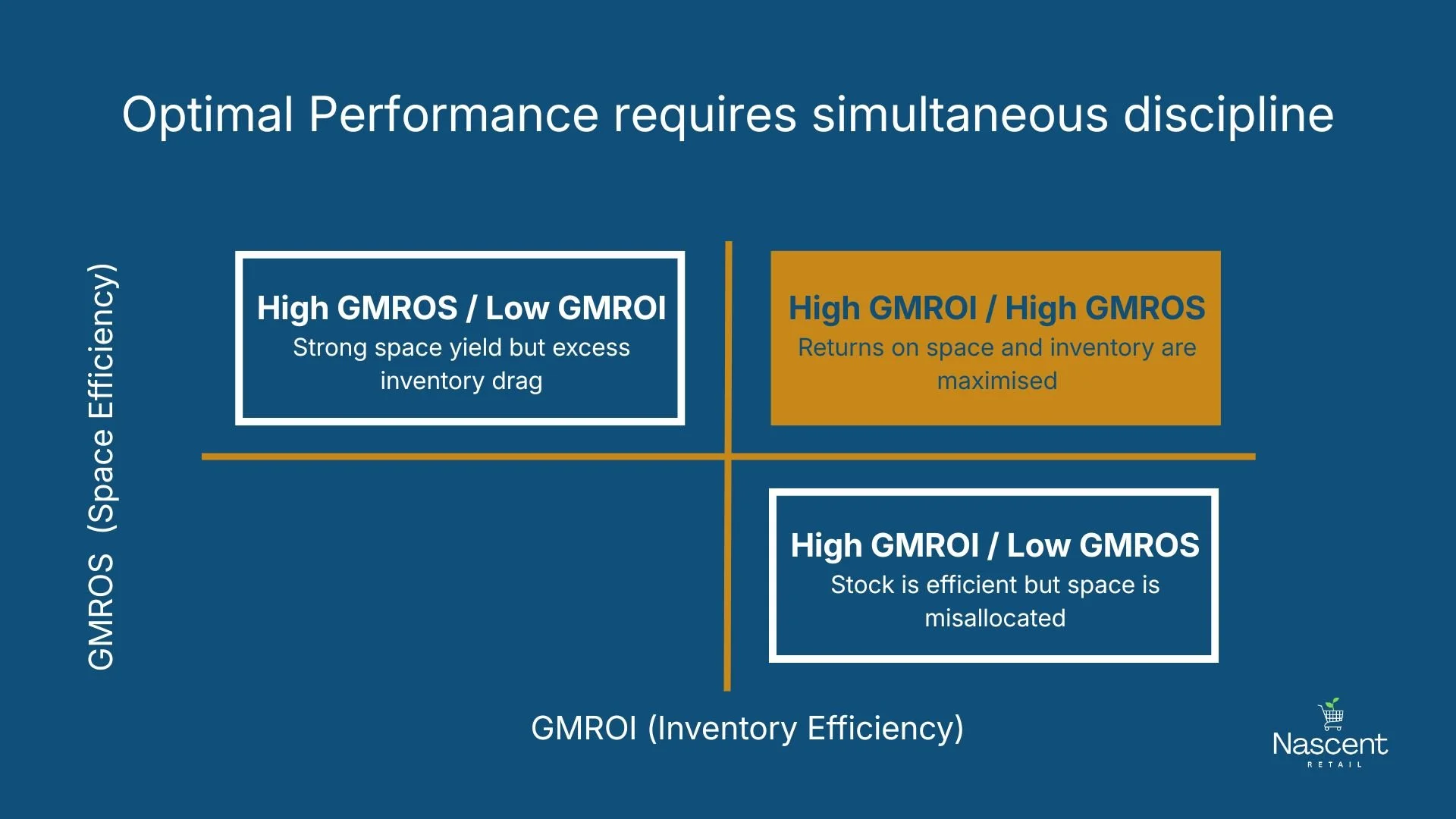
Figure: Leadership maturity influences how retail capital is allocated, shaping productivity and long-term enterprise value.
Many retailers, however, manage these assets reactively. Space allocation is often influenced by supplier relationships, historical layouts or promotional pressure rather than disciplined commercial analysis. Inventory purchasing may be driven by instinct or habit rather than structured evaluation of returns. Over time, these patterns lead to inefficient use of capital and weakened financial performance.
Retail analytics provides clear ways to measure the productivity of these assets. Gross Margin Return on Space (GMROS) measures how much gross margin is generated for each unit of selling space. It highlights the opportunity cost of physical retail capital and helps identify which categories genuinely earn their place on the shop floor. When large areas of the store are allocated to low-margin or slow-moving products, GMROS reveals the hidden cost of that decision.
Gross Margin Return on Inventory (GMROI) measures the gross profit generated for every dollar invested in stock. This metric captures the effectiveness of inventory discipline, including buying decisions, assortment structure and stock turnover. Strong GMROI indicates that inventory is working efficiently as a capital asset, generating profit without unnecessary working capital being tied up in excess stock.
Optimal retail performance requires discipline in both areas simultaneously. High space productivity with inefficient inventory still traps capital in stock. Efficient inventory with poorly allocated space limits the earning potential of the store environment. Strong retailers manage both dynamics together, ensuring that space and inventory are aligned with the categories that generate the highest return.
The variable that determines whether this discipline exists is leadership maturity. Capital allocation is rarely a structural problem; it is a leadership capability problem. In environments where leadership maturity is low, retail decisions tend to be reactive. Buying becomes emotional, shelving becomes supplier-driven and operational decisions are made without consistent performance data.
In more mature organisations, leadership teams establish clear accountability for the productivity of retail capital. Performance metrics are regularly reviewed, category returns are measured and structured decision-making replaces reactive behaviour. Over time, this discipline becomes embedded in the culture of the organisation.
When leadership capability improves capital discipline, two outcomes follow. Floor space is allocated more effectively through GMROS analysis, and inventory becomes more productive through GMROI discipline. Together, these improvements strengthen the overall productivity of retail capital.
Stronger capital productivity supports more stable operating performance. When capital is deployed efficiently, the business generates more reliable profit from the same physical footprint and working capital base. This leads to greater resilience in operating earnings and ultimately contributes to stronger enterprise value over time.
Retail profitability is therefore not simply a function of sales growth or merchandising creativity. It is the outcome of disciplined leadership and thoughtful capital allocation. By integrating leadership capability with structured retail analytics, businesses can significantly improve the productivity of their most important assets: space and inventory.
Retail Systems Research (2023). Retail Analytics and Inventory Productivity.
Tigert, D., & Ring, L. (1998). Retail Inventory Productivity Metrics.
McKinsey & Company (2022). Retail Productivity Insights.
Jim Collins (2001). Good to Great: Level 5 Leadership.